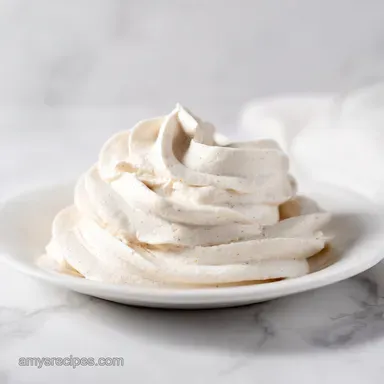
Vanilla American Buttercream: Stable and Silky

- Time: 5 min active + 0 min chilling = Total 20 minutes
- Flavor/Texture Hook: Silky, buttery, and holds its shape
- Perfect for: Birthday cakes, cupcakes, and beginner bakers
- Easy Vanilla American Buttercream Recipe
- The Magic Behind Texture
- Component Analysis
- The Essentials List
- Must Have Kitchen Tools
- The Step-by-Step Process
- Fixing Common Consistency Issues
- Troubleshooting Common Issues
- Adjusting For Different Sizes
- Common Frosting Misconceptions
- Storing Your Frosting
- The Best Pairings
- Recipe FAQs
- 📝 Recipe Card
I still remember the first time I tried to make frosting for my sister's graduation. I was in a rush and skipped sifting the powdered sugar, thinking it was a waste of time. As soon as I started piping, these tiny, gritty white lumps appeared everywhere, looking like little snowflakes of failure on a chocolate cake.
I spent an hour trying to stir them out by hand, but once they're in there, they're in there.
That's why I'm so adamant about the steps here. When you get it right, there's nothing better than that moment the butter turns from yellow to a pale, ghostly ivory and the whole kitchen smells like a high end bakery.
This Vanilla American Buttercream is my go to because it's stable, simple, and actually tastes like something you'd buy at a professional shop.
You can expect a frosting that's glossy and smooth. It's not too heavy, provided you beat the butter long enough. Trust me on this, the patience you put into the first five minutes of mixing is what makes the difference between a "homemade" look and a professional finish.
Easy Vanilla American Buttercream Recipe
Right then, let's get into the grit of it. Most people think you just throw everything in a bowl and hope for the best, but there's a specific rhythm to this. If you rush the butter, it stays yellow. If you dump the sugar in all at once, you get a cloud of white powder in your hair. We're doing this the right way.
The goal is a texture that's velvety and holds a peak. Whether you're doing a simple crumb coat or intricate swirls, this recipe provides the structure you need. It's a love language in sugar form, and it's honestly the most versatile frosting in my arsenal.
The Magic Behind Texture
I used to wonder why some frostings felt like eating a stick of butter while others felt like clouds. It's all about how we treat the fats and sugars.
- Air Incorporation: Beating the butter for several minutes traps tiny air bubbles, which lightens the overall feel.
- Sugar Structure: The fine particles of powdered sugar act as a stabilizer, holding the butter in a semi solid state.
- Fat Balance: A small amount of heavy cream thins the density without breaking the emulsion.
- Salt Neutralization: Salt doesn't make it "salty," it just stops the sugar from feeling overwhelming on your tongue.
Before we move to the ingredients, let's look at how this classic version compares to a rushed "quick" method.
| Feature | Fast Method | Classic Method | Impact |
|---|---|---|---|
| Beat Time | 1-2 minutes | 5 minutes | Classic is much fluffier |
| Color | Pale Yellow | Ivory/White | Classic looks professional |
| Texture | Dense/Heavy | Silky/Airy | Classic is easier to pipe |
Component Analysis
Before you start, it's helpful to know what each part is actually doing in the bowl.
| Ingredient | Science Role | Pro Secret |
|---|---|---|
| Unsalted Butter | Primary Structure | Must be "cool" room temp, not oily |
| Powdered Sugar | Bulk & Stability | Always sift to avoid "grit" |
| Vanilla Bean Paste | Flavor Depth | Adds those beautiful black specks |
| Sea Salt | Flavor Balancer | Use fine grain so it dissolves |
The Essentials List
Gather these items before you turn on the mixer. Having everything ready prevents the butter from melting while you hunt for the salt.
- 1 cup (227g) unsalted butter, softened to room temperature Why this? Provides the creamy base and structure
- 1/4 tsp (1.5g) fine sea salt Why this? Cuts the sweetness
- 3 cups (360g) powdered sugar, sifted Why this? Creates the smooth, pipeable body
- 1 tbsp (15ml) heavy cream, room temperature Why this? Adjusts consistency and adds richness
- 2 tsp (10ml) vanilla bean paste or pure vanilla extract Why this? The signature aromatic flavor
If you're missing something, don't panic. Here's how to swap things out without ruining the batch.
| Original Ingredient | Substitute | Why It Works |
|---|---|---|
| Unsalted Butter | Vegetable Shortening | More stable in heat. Note: Lacks the rich butter flavor |
| Heavy Cream | Whole Milk | Similar liquid ratio. Note: Slightly less velvety finish |
| Powdered Sugar | Cornstarch + Granulated Sugar | Blend in a food processor. Note: May be slightly grainier |
| Vanilla Bean Paste | Maple Extract | Similar viscosity. Note: Completely changes flavor profile |
Since we're talking about smoothness, according to King Arthur Baking, sifting your powdered sugar is the only way to ensure no clumps remain, which is a total lifesaver for this Vanilla American Buttercream.
Must Have Kitchen Tools
You don't need a professional kitchen, but a few tools make this way easier.
- Stand Mixer or Hand Mixer: A stand mixer such as KitchenAid is great for the long beating process.
- Sifter or Fine Mesh Strainer: Non negotiable for the sugar.
- Rubber Spatula: To scrape the sides of the bowl so you don't get butter chunks.
- Piping Bags and Tips: For that professional look.
The step-by-step Process

Let's crack on with the mixing. Keep an eye on the color of the butter - it's your best indicator of progress.
- Place the softened butter and salt in your bowl.
- Beat on medium high speed for 3-5 minutes until the mixture transforms to a pale ivory color and feels light and fluffy. Note: Don't skip this; it's where the air gets in.
- Turn the mixer to low speed.
- Add the sifted powdered sugar one cup at a time.
- Once incorporated, increase speed to medium high for 2 minutes until a smooth paste forms.
- Pour in the heavy cream and vanilla bean paste.
- Beat on medium speed for 60 seconds until the frosting reaches a silky, glossy consistency.
Chef's Note: If you see air bubbles in your finished frosting, take a rubber spatula and "smush" the frosting against the side of the bowl for a minute. It forces the air out and makes the finish mirror smooth.
Fixing Common Consistency Issues
Even the best of us hit a snag. Usually, it's because the room is too hot or the butter was too soft.
Troubleshooting Common Issues
| Issue | Solution |
|---|---|
| Why Your Frosting Is Grainy | This usually happens if the sugar wasn't sifted or if the butter wasn't beaten enough before adding the sugar. If it's already mixed, you can try beating it on high for another 2 minutes, but sifting |
| Why Your Frosting Is Runny | Too much liquid or butter that's essentially melted will cause this. You'll need to add more powdered sugar, one tablespoon at a time, until it holds its shape. |
| Why Your Frosting Is Too Sweet | This is the classic American buttercream struggle. Adding a pinch more salt or a tiny squeeze of lemon juice can cut through that sugar wall. |
Quick Fix Checklist:
- ✓ Butter is "pliable" but not oily
- ✓ Sugar is sifted, not scooped
- ✓ All liquid ingredients are room temperature
- ✓ Mixer speed is varied according to the steps
Adjusting For Different Sizes
Scaling this Vanilla American Buttercream is pretty straightforward, but you have to be careful with the seasonings.
Scaling Down (1/2 batch): Use 1/2 cup butter and 1.5 cups sugar. Since you're using smaller volumes, the mixer might struggle to reach the butter at the bottom. Use your spatula more often. Reduce the final beating time by about 20 seconds.
Scaling Up (2x-4x batch): When doubling, don't double the salt exactly - start with 1.5x and taste it. If you're using a hand mixer, work in batches to avoid burning out the motor. For very large batches, lower your mixer speed slightly to prevent a "sugar volcano" in your kitchen.
If you find this frosting too rich for a massive cake, you might consider a lighter alternative. For a different texture, my Whipped Cream Frosting recipe is a great way to keep things airy.
Common Frosting Misconceptions
I've heard a lot of "rules" about buttercream that are actually just myths. Let's clear them up.
Myth: Butter must be melted to mix easily. Absolutely not. Melted butter destroys the emulsion and leads to a soupy mess. Butter should be "cool room temperature," meaning if you press it with your finger, it leaves an indent but doesn't slide away.
Myth: Adding more sugar makes it more stable. To a point, yes. But too much sugar makes the frosting gritty and overly sweet. Stability comes from the aeration of the butter and the correct ratio of fat to sugar, not just piling on the powder.
Storing Your Frosting
Since this is butter based, it's quite hardy.
Storage: Keep it in an airtight container in the fridge for up to 1 week. To use it again, let it sit at room temperature for 2 hours, then re beat it with a mixer to bring back the fluffy texture.
Freezing: This stays great in the freezer for 2 months. Thaw it in the fridge overnight and whip it again before using.
Zero Waste Tip: Never throw away leftover frosting! I love using the remnants as a decadent dip for sliced apples or swirling a spoonful into my morning porridge for a treat.
The Best Pairings
This Vanilla American Buttercream is a blank canvas. It works with almost anything, but some pairings just hit different.
If you're looking for something elegant, try it on a Strawberry Shortcake for 8 recipe. The sweetness of the frosting balances the tart berries perfectly.
For something a bit more cozy, use a small amount of this frosting to top some Brown Butter Pumpkin Cookies. The earthy pumpkin notes and the creamy vanilla are a match made in heaven.
Decision Shortcut:
- If you want a stark white look: Use clear vanilla extract.
- If you want a gourmet flavor: Use vanilla bean paste.
- If you want it stiffer for piping: Add 2 more tablespoons of powdered sugar.
Recipe FAQs
What is vanilla American buttercream?
A sweet, stable frosting made from whipped butter and powdered sugar. It is prized for its simplicity and ability to hold shapes well for piping.
What's the difference between American buttercream and normal buttercream?
American buttercream uses powdered sugar, while other common versions use cooked egg whites. This makes the American style much faster to prepare and significantly sweeter.
How to make buttercream for diabetics?
Substitute the powdered sugar with a sugar-free alternative. For a naturally lower-sugar treat, try our birthday cake protein balls.
What are common American buttercream mistakes?
Failing to sift the powdered sugar or under-beating the butter. These mistakes lead to a gritty texture instead of a smooth, ivory paste.
How to fix grainy frosting?
Beat the mixture on high for an additional 2 minutes. If the graininess persists, it is likely because the powdered sugar was not sifted before mixing.
How to store leftover buttercream?
Place the frosting in an airtight container in the fridge for up to 1 week. Let it sit at room temperature for 2 hours and re-beat it to restore the fluffy texture.
Is it true that buttercream must be made with eggs to be stable?
No, this is a common misconception. This recipe creates a stable, pipeable frosting using only butter and sugar without the need for eggs.
Vanilla American Buttercream in 20 Minutes